

02 Apr A Matter of Due Process
A Matter of Due Process
By Hilda Shymanik
About six years ago, I met a colleague during a short-lived, recurring five-day full-time freelance assignment, a 40-hour-a-week two-year contract. We were both Mexican and new to that courthouse, as was the coordinator. It was also a courthouse where team interpreting was not common, despite ongoing efforts to move toward best practices.
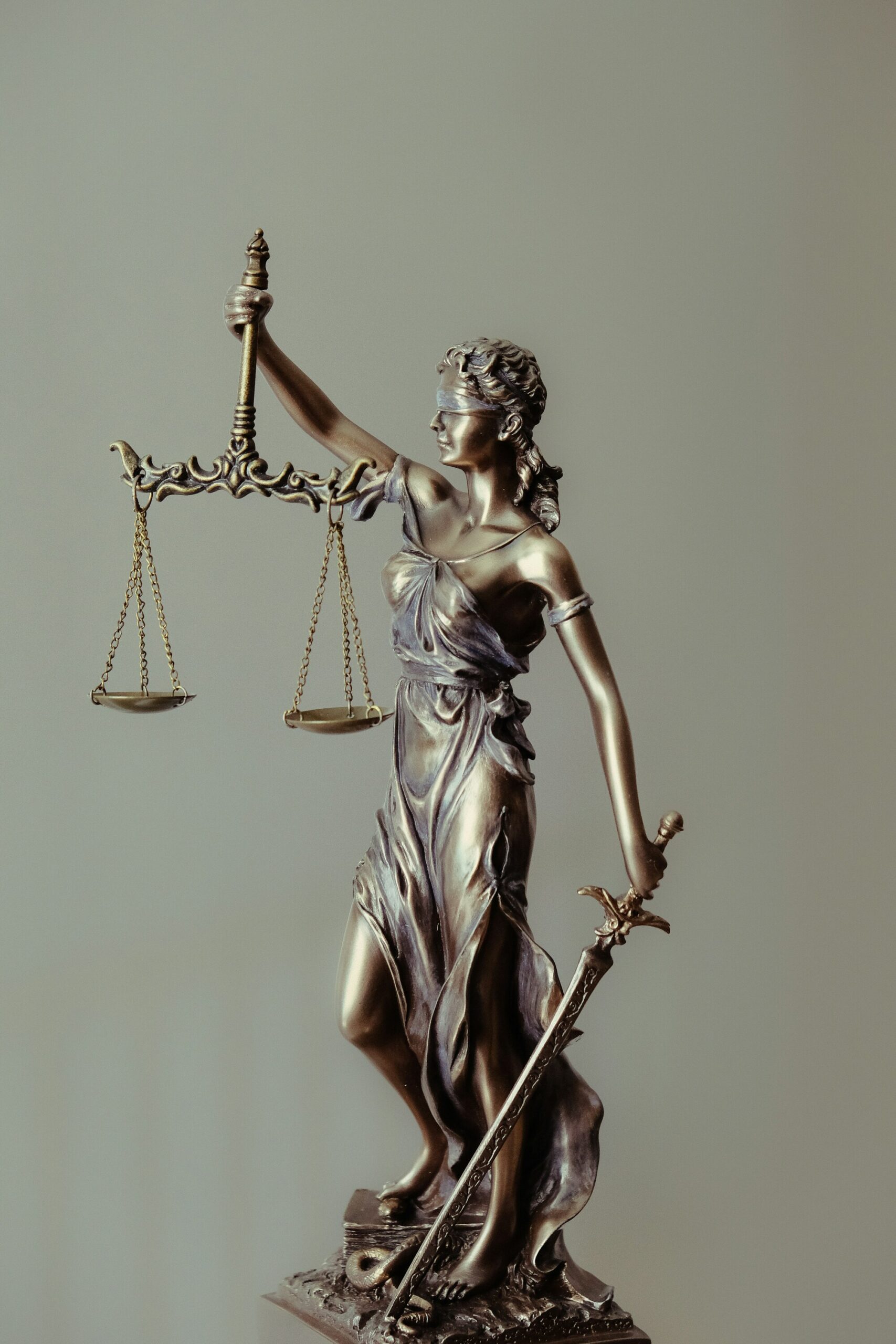
Lady Justice stands as a timeless symbol of fairness, impartiality, and the authority of the law
Because of the solo nature of the work, I didn’t have the chance to collaborate with my paisana (countrywoman) until much later, when we found ourselves assigned to a high-profile felony case involving multiple victims and deeply sensitive sexual content. The case was particularly controversial due to the notoriety of the defendant and his family ties to one of the victims.
During the victim’s testimony, the defense attorney delivered questions in rapid succession, sharp, relentless, and often forceful. Seasoned interpreters know how exhausting this can be. The pace alone is demanding, but when paired with emotionally charged subject matter and aggressive delivery, the challenge intensifies significantly.
I was working in the passive role when my colleague, the active interpreter, asked the judge on a couple of occasions for permission to consult with me. The terminology was complex and highly sensitive, and we needed to ensure both precision and consistency. These brief consultations were essential to maintaining accuracy.
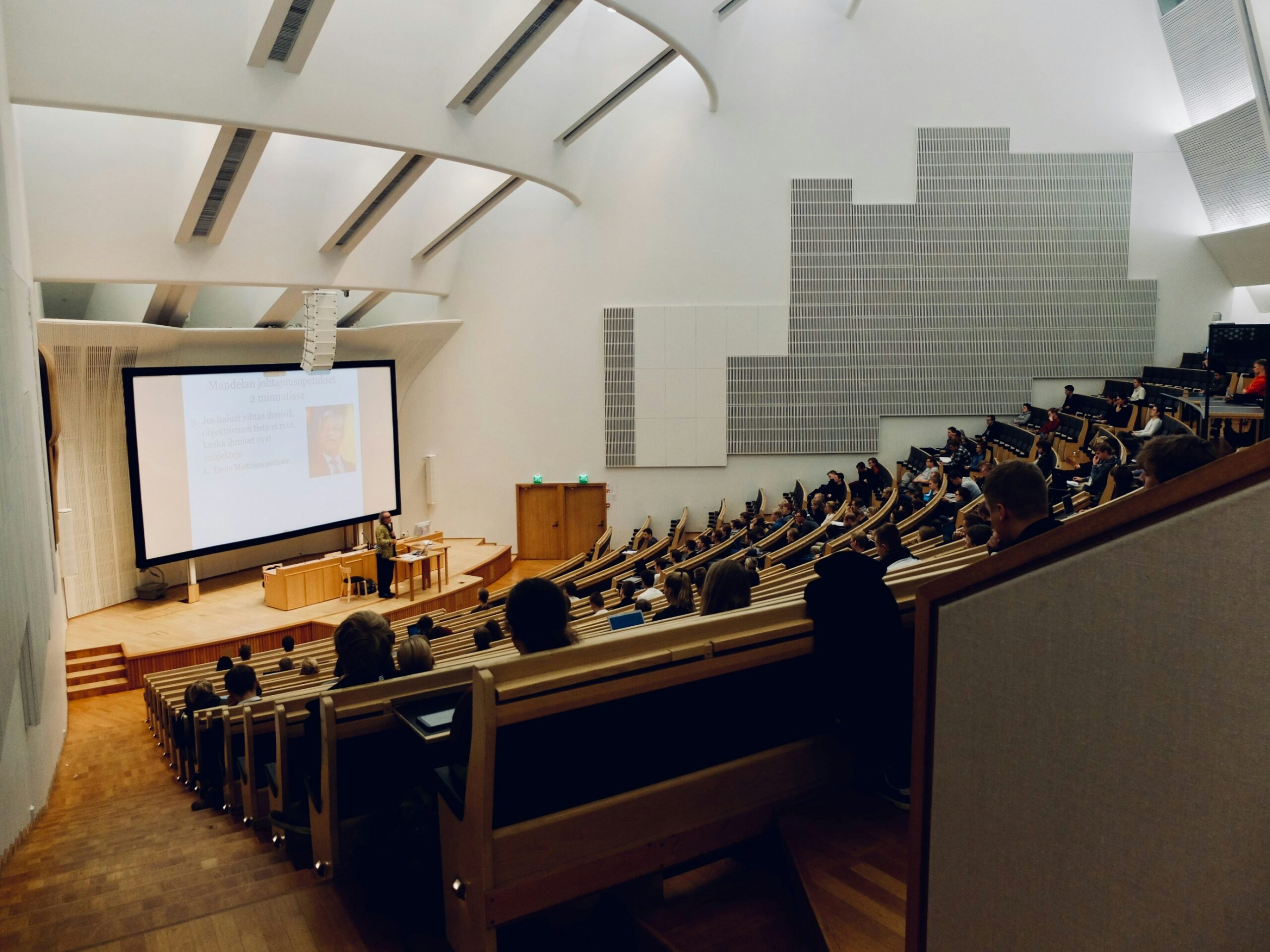
A hub of academic excellence—training the next generation of interpreters and translators
After one such exchange, during the defense’s questioning, the ADA suddenly interrupted. He told the court that he was “somewhat familiar” with Spanish, having grown up in a Hispanic neighborhood, and that he felt we were not interpreting accurately. Both my colleague and I stood firmly by our renditions. The judge promptly admonished the attorney for relying on a vague claim of familiarity rather than expertise.
The judge then excused the jury to address the issue.
Once the jury was out, the defense attorney raised his own objections. He challenged not only our interpretation but also our collaboration. He argued that the passive interpreter should not assist the active interpreter in any way, no whispering, no notes, no input whatsoever. In his view, we were “both interpreting at the same time,” which he claimed was improper.
Then came the most startling moment: he requested that both interpreters be sworn in as witnesses and subjected to questioning.
We were stunned.
Neither of us had ever encountered anything like this. In that moment, I drew on my professional background, my experience as a NAJIT and the New York Circle of Translators board member, along with my certifications and credentials, to explain the mechanics and ethics of team interpreting. I outlined why brief consultations are not only appropriate but often necessary to ensure accuracy, especially in complex cases.
It made no difference.
The defense attorney pressed on. He demanded to know exactly what we had discussed, what alternative terms we had considered, and how we had arrived at our final choices. He framed it as an issue of due process.

Effective communication and collaboration are key to successful teamwork
At that point, the judge, clearly growing weary of the argument, read portions of the Language Access Plan into the record. Still, she acknowledged that the defense had raised questions worth considering and adjourned the case for the day, as it was already past 4 p.m.
The next morning, the judge returned, having conducted extensive legal research. She cited relevant precedent (which I’ll omit here to preserve anonymity) and ultimately overruled the defense’s objections.
We resumed the trial without further incident.
Afterward, both my colleague and I were commended for how we handled an extraordinarily difficult and unprecedented situation. More than anything, it reinforced how valuable it is to have the support and trust of your colleague, the judge, the coordinator, and the program manager.
I’d be very interested to hear if others have faced similar challenges. How did you handle them? And if you haven’t encountered this situation, what would you do? I always appreciate hearing about the resourcefulness and strategies others bring to this work.
Keep the Conversation Going
If this topic resonated with you, be sure to check out our previous blog posts for more insights on the realities of our profession, and the evolving world of judiciary translation and interpreting:

Dear Hilda, I greatly appreciate your contribution, one of manys! While I have not faced exactly the same situation, most of my work in the courts has been in Miami, where Cuban and not Mexican Spanish dominates; however amateur interpreters leave much to be desired. I stood by my rendition and only once were they right, I hadn’t fully understood the fast-paced Cuban Spanish, and misrepresented the message. I hope other colleagues will respond and that you will share what they tell you with us, abrazos.
Thank you for your regular comments, Georganne. We have never met in person, though I had the opportunity to meet you virtually years ago during a NAJIT meeting. I hope to meet you in person soon, to chat some more. I know how busy you are, but I hope you consider joining the blog team or participating as a guest writer. I am sure we can learn a great deal from anything you send us. Greetings!
I don’t see attorneys complaining to judges about how court reporters are doing their work…
But it’s easy to get into victim narratives, how now one cares about us, etc.
Good on you, Hilda, for handling such a situation so professionally.
Once interpreting at a lengthy evidentiary proceeding in a dependency and neglect case, our choice of words over a text message screenshot was challenged. The attorneys started questioning my colleague (the active interpreter) about what the proper translation was, and the judge allowed it to go along. My colleague was struggling to interpret simultaneous and answer the lawyers’ questions. But she quickly pulled herself together and asked: “Is the interpreter testifying now?”
She quickly saw that whatever answer she gave might be used by either party to strengthen their case, and she had the right reflex not to go down that path. The judge very quickly caught on, too, and admonished the lawyers. That was a positive outcome.
Thank you for your comments, Jules. I face that questioning regularly, and sometimes it catches me off guard, where it takes a bit to figure out they are speaking to me. Say, on the following exchange:
Attorney: “What did he say, Miss Interpreter?”
Interpreter: ¿Qué dijo la señorita intérprete?
Attorney: “I am speaking to you, Ms. interpreter!”
Interpreter: “¡Le estoy hablando a usted, señorita interpreter!
Interpreter: “Interpreter speaking. The interpreter is not testifying. May it please the court, for counsel to direct his questions to the witness/defendant?
It is important not to play into these situations. Now, I know that there may be occasions where bench and bar are talking to us, to raise our voice, to ask us to move to allow dirent view of the defendant by the jury, etc.
I forgot to comment on this. What a great statement, Jules! “I don’t see attorneys complaining to judges about how court reporters are doing their work,” or about each other’s jobs for that matter (judge/attorney)
Let me guess: the defense attorney didn’t have much of a case, am I right?
Exactly! Interpreters have all of the responsibility and none of the authority, and attorneys sometimes will throw us under the bus as a last ditch effort to make the case go their way. Keep a cool head and trust in your training, colleagues.
Well said, Julie! We see this quite a bit. Thank you for your comments.
Hi Arnoldo! No, he didn’t. His client took the witness stand to his attorney’s dismay. I don’t need to tell you what the verdict was, do I? 😉
You handled that difficult situation in such a professional manner!
Where is the best place for the “passive” interpreter to stand/sit while the “active” interpreter is interpreting at the witness stand?
In some jurisdictions the passive interpreter sits away from the active interpreter while he/she interprets at the witness stand, while in other jurisdictions both interpreters stand at the witness stand except that one is actively interpreting while the other stands close by in case consultation is needed.
Hello Sel,
It is my personal opinion that both interpreters may be together, or close together, by the witness stand. I would venture to say that it is the best practice for team interpreting.
Thank you for your comments! I
Hi Hilda,
Thank you for sharing your experience in such great detail. As I read your article, I was immediately struck by your report of a system where team interpreting was not common. This resonates deeply with me; many of us must not only perform our jobs to high standards but also have to educate the courtroom about our role. Working conditions for court interpreters will only improve if we emulate your courage
Hello Hilda, thank you for your article. My colleague and I just went through a similar situation yesterday.
We were challenged almost by the same reasons in an administrative hearing. We requested a sidebar conference with the judge. We explained to her that we stood by our interpretation, and that we were observing GR 11.2 that is the rule for interpreters in the State of Washington. Everything was set on record. We can always stand for what we know it is right in a professional manner. It is important to know the codes that govern us.
Thank you for sharing your own experience and even sharing the state code of ethics! Here is a link for those who want to read them and compare them with their own state’s code.
https://www.courts.wa.gov/court_rules/pdf/GR/GA_GR_11_02_00.pdf
Hilda, thank you for sharing this story. That must have been so stressful! In cases where the attorneys decide to make it about the interpreters, I absolutely rely on our code of ethics. I also make sure I handle it as an officer of the Court and place all the situation on the Judge’s hands. Unfortunately, newer interpreters do not see the value of our code of ethics. It is a shame that many of our less seasoned colleagues do not see the value in knowing each canon and how to use it. I have been in similar situations and the Judge has always ruled in our favor. Perhaps “The importance of our code of ethics” is, once again, a subject covered by NAJIT in as many opportunities as possible. Thank you again!
Yes! I completely agree regarding the importance of our code of ethics. There has been talk at NAJIT, at least during my years on the board, to update the NAJIT code of ethics. I hope that the project is revived at some point in the near future.
Thsnks!